
How to Build an Emergency Fund From Scratch (Step-by-Step Guide)
Introduction
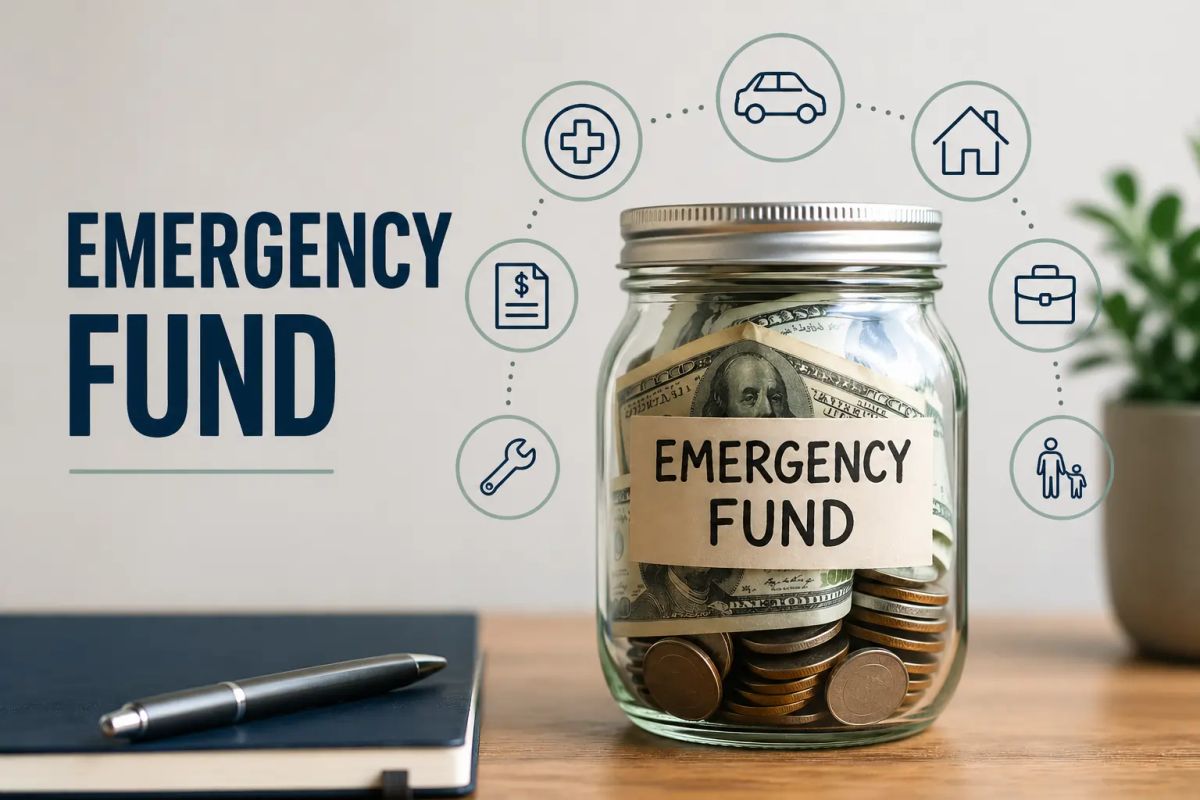
Have you ever had an emergency that put you in a financial predicament? Did you have an emergency fund at the time? An emergency fund is money saved for a costly or unfortunate financial situation. This could be a car repair, a job loss, a medical bill, or any other unforeseen expense. Without an emergency fund, your personal finances become strained. When finances become stressful, life becomes stressful, and no one wants that.
What Is an Emergency Fund
An emergency fund is a store of money for an individual, business, or organization that allows for continued smooth operation in the event of a financial emergency. If a financial emergency occurs, funds would be taken from the emergency fund to cover the expense and then replenished over time. The fund prevents having to take out debt to cover the expense, which can become another financial emergency in itself.
How Much Should You Save
The amount of money to save depends on many factors. For the average single person with no dependents who works a normal job, 3-6 months of monthly expenses is usually enough. However, saving more than necessary is never a bad thing. The number of months may need to increase depending on whether you have dependents, own a home, have your own business, or work in a career with inconsistent income, such as sales. In situations like those, having a 6-12-month or even 18-month emergency fund might make more sense.
The easiest way to calculate your monthly expenses is through your budget. If you don’t have a budget, stop here and make one. Having and following a budget is a very important foundational piece of personal finance. Without it, there is no real knowledge or control of your money.
Where to Keep It
When saving up your emergency fund, it is very important to keep it in a safe place. The ideal place to store it would be a high-yield savings account. These are savings accounts that pay much higher interest rates than traditional ones. If you want to save it in a traditional savings account, that is fine, but keep in mind that your money will lose more value over time to inflation than in a high-yield savings account.
However, a common mistake people make is trying to chase the highest yields they can in their emergency fund, which generally means investing it. Investing in the fund is not the correct answer. With an investment, the balance of your emergency fund can become highly volatile. Imagine you invested your emergency fund in an ETF tracking the S&P 500. If there is a market downturn that causes your company to lay you off, your emergency fund will lose value at a time when you need it most. That is a great way to make a stressful financial emergency much worse.
How to Start When You Have No Extra Money
A lot of people have a hard time building an emergency fund, especially if they can only save a little or are spending more than they earn. The first step will always be to make sure you have a budget. A budget will tell you exactly how much money you should be able to save each month. Without it, creating and following a plan becomes very difficult.
When starting your emergency fund, no one expects you to fill your fund out of thin air. Any money in an emergency fund is better than none, so start small. If you have an extra $100, toss it in your fund. Taking the first step is the most important and will allow the building to compound.
One of the best ways to build your emergency fund is to use a technique called “paying yourself first.” When your employer pays you, you set up an automatic transfer that moves a specific amount of money from your checking account to your emergency fund. For example, if my employer pays me weekly and I know I can save an average of $400 over a four-week month, then I will set up a $100 recurring transfer on the weekly payday. This forces you to spend the money that you already have budgeted in your checking account.
Keep in mind, this method is not foolproof. If you spend over your budget (or don’t have a budget at all), then you will be inclined to pull the money back out of your emergency fund or spend it on debt. Overspending will slowly undermine the emergency fund, either by preventing it from growing or by causing the debt you incur to offset its balance.
How Long Does It Take?
The time it takes to build up an emergency fund depends on the individual's circumstances. The two factors that directly affect this are your income and expenses. If two people take home $4,000 a month, but one needs $2,400 a month to survive and the other needs $3,800, the speed of saving will vary for each. In the same vein, if two people spend the same amount but one takes home more, that will also affect the length of time.
Here is a real-life example of saving for an emergency fund. Imagine you make $4,500 a month net and need to spend $3,000 a month to survive. You can save $1,500 a month, and you would like a 6-month emergency fund totaling $18,000. That means it would take 12 months to save the fund, presuming you don’t have any emergencies during that time and stick closely to your budget.
For many people, there isn’t much money left over each month. In those situations, going to your budget and trying to tighten it where possible will help significantly. For example, if I spend $10 a day on lunch at a restaurant, that would be about $300 a month. But if I start packing my own lunch instead, it might cost close to $100, which would free up an additional $200 a month. Tightening your expenses follows the idea that “saving money is making money,” because spending less money gives you a larger monthly “profit” in your personal finances.
Common Mistakes to Avoid
As with anything, there are mistakes to avoid to use and maintain your emergency fund correctly. A very common mistake is using it for non-emergencies. Some people will save up a 6-month emergency fund and then buy a car with the money. Well, what happens when something pops up later that month? There is no money to cover the emergency, which could force the person to sell their car for quick cash, resulting in a loss in the transaction.
Another mistake is not setting aside money in a separate savings account but instead keeping it in your checking account. Not separating the money makes it too easy to spend and too difficult to track the emergency fund balance. Always make sure to put the money in a separate account.
Also, an emergency fund needs to either be full or actively replenished. If an emergency occurs and the fund covers it, replenishing the fund becomes top priority. It is not uncommon for a series of financial emergencies to occur at once, so making sure to keep it full is extremely important.
Frequently Asked Questions
How important is an emergency fund? - It is very important. Without it, your financial future can go off the rails from just one emergency. Always remember, not having an emergency fund is an emergency.
Should I pay off debt or build an emergency fund first? - It depends on the debt and your personal situation. In general, you should have at least a one-month emergency fund if you have high-interest bad debt. Once you pay off the debt, you can finish building the emergency fund.
What if I have no money left over to save? - First, make sure you have budgeted properly. If you have, and you are breaking even or even losing money every month, then you have to reevaluate what you need in your monthly budget versus what you want. Whenever you don't have an emergency fund, you'll likely have to switch to a bare-bones budget instead of a normal one to save enough money quickly.
Conclusion
Obviously, an emergency fund is important. Without one, an emergency will be much more stressful than it needs to be. If you don’t have an emergency fund, building it needs to be one of your top priorities. An emergency fund will set you up for future financial success. How many months of living expenses do you have saved?